
Compounding Disaster Recovery
How Community-Based Organizations Fill Critical Gaps During Overlapping Crises
Written by Rhone-Ann Huang
In 2020, Ponce, Puerto Rico, was hit by two overlapping disasters, pushing the city’s disaster recovery response to its limits. While grappling, like the rest of the world, with the effects of a global pandemic, the city was simultaneously struck by the Southwest earthquakes, leaving it with both a public health and public housing crisis.
The term “compounding disasters” refers to the occurrence of multiple overlapping catastrophes. Since government and disaster relief agencies are left grappling with the effects of multiple events, compounding disasters place increased pressure on an already-strained response system. Recent research has examined how urban and regional planners prepare for compound disasters, highlighting key takeaways from past events. In the case of Ponce, demand was centered on public housing recovery, a holistic process that involves not only the physical recovery of houses but also the relocation of individuals and the provision of community support services. Residents of public housing are especially vulnerable to the effects of natural disasters, as they are often low-income, in the racial minority, and/or have chronic illness or disabilities. Unfortunately, housing recovery policies tend to favor middle-class homeowners over low-income homeowners and combined with the existing vulnerabilities of public housing communities, these policies make effective disaster response difficult.
While disaster recovery is often associated with government agencies and non-profit organizations, a third critical party was essential in Ponce: Community-Based Organizations (CBOs). CBOs are locally based and deeply embedded in their communities, enabling them to recognize specific community needs serving as intermediaries between local communities and the government. While non-profits tend to be better-resourced with professional staff and reliable access to grants, CBOs are much smaller and grassroots-based, leaving them with fewer governmental connections.
The small structure of CBOs offers both advantages and disadvantages. Running independently allows them to act quickly and efficiently, filling in gaps where government assistance is delayed. On the other hand, factors like minimal staff, lack of funding, and reliance upon volunteers represent organizational constraints that limit their disaster response capacity. Combining the strengths of both CBOs and non-profit organizations opens a whole new window of disaster response possibilities; through collaborating with non-profits, CBOs can continue to act within their local communities while simultaneously increasing both networking and resource capacity.
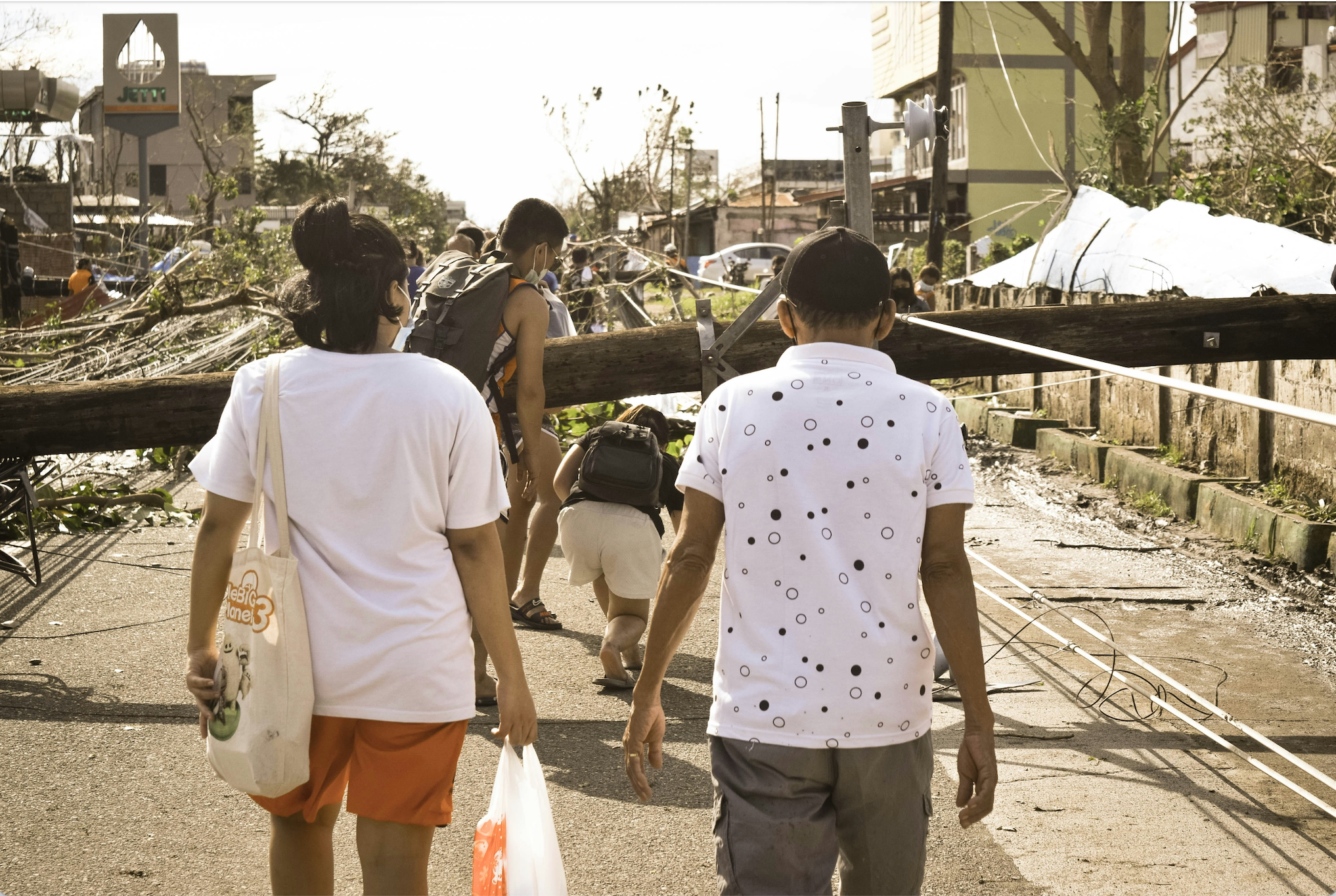
Though less literature is available on CBOs compared to non-profit organizations, they undoubtedly play a fundamental role in disaster recovery. In Ponce, CBOs offered not only emergency response but also assistance in housing recovery, relocation of affected individuals, and supply of essential resources like food and medication.
As crises proliferate globally, compounding disasters are expected to increase in frequency. The case study of Ponce offers insight into the capabilities of CBOs and how, through working in unison with non-profits, these organizations can act in the foreground of disaster relief efforts.
If you’re interested in reading more about this topic, check out the article by Sayma Khajehei, Divya Chandrasekhar, Ivis Garcia, and Elizabeth Colón Rivera in the Journal of Planning Education and Research.
Khajehei, S., Chandrasekhar, D., Garcia, I., & Colón Rivera, E. (2026). The Role of Community-Based Organizations in Recovery of Public Housing Residents Following Compounding Disasters: Case Study of Ponce, Puerto Rico. Journal of Planning Education and Research, 0(0).